Several issues overlap
Full swing, short game, putting and pressure behaviour all feel unreliable, making it difficult to know where improvement should begin.
Three-hour assessment near Bournemouth
When several parts of your golf appear to be interacting, a short lesson can begin too far downstream. This three-hour assessment builds a connected picture of your movement, club delivery, ball flight, skill, physical context and response to performance—then reduces that picture to the priorities that matter most.
Private performance studio near Bournemouth, Dorset · Three hours · In person · Current price shown in the live booking calendar
The purpose of a baseline
A golfer may arrive with a swing complaint when the more important limitation is strike variability, an unsuitable intention, a physical workaround or a performance response that changes the motion under consequence. The assessment exists to establish which questions deserve attention first.
Full swing, short game, putting and pressure behaviour all feel unreliable, making it difficult to know where improvement should begin.
Different lessons, drills or equipment changes have addressed isolated symptoms without producing one coherent explanation.
Useful movement or skill appears in practice but becomes less accessible on the course, under speed or when score matters.
You want evidence before committing time to technical change, physical work, performance coaching or a longer programme.
Priority-led investigation
The same three hours should not be identical for every golfer. The conversation and initial evidence determine which assessment lenses need depth and which need only enough review to place them in context.
Strike, face control, club path, low point, speed, launch, spin and dispersion can be compared with movement and the golfer's intended shot.
Contact, trajectory, landing point, distance control, lie interpretation and shot selection can be sampled where scoring around the green is a priority.
Start direction, impact, roll, pace, read and intention can be explored with representative tasks and measurement selected for the question.
Simple golf-specific movement screening can clarify whether mobility, strength, balance or physical comfort is influencing the golfer's organisation.
Attention, expectation, emotional response, trust and what changes under consequence are considered through conversation and task behaviour.
Typical misses, scoring patterns, statistics, strategy and decision behaviour help connect studio findings to the golf the player is actually trying to improve.
Technology may include TrackMan, 3D motion capture, SwingCatalyst force data or putting analysis when it helps answer the identified question. Not every golfer needs every system, and no single number is treated as a universal model.
Breadth with boundaries
The assessment is long enough to connect multiple areas, but its value depends on disciplined prioritisation rather than attempting an exhaustive test of the entire game.
Assessment structure
The session moves from context to representative evidence, then from interpretation to a practical test. The aim is for you to understand the reasoning—not simply receive a list of findings.
Discuss goals, coaching history, common shots, performance patterns, practice, physical considerations and what you believe is holding the game back.
Capture representative performance before changing it. The relevant swing, skill, putting, movement or psychology tasks are selected from the evidence.
Compare what the golfer experiences with what the ball, club, body and task reveal. Conflicting explanations are tested instead of accepted automatically.
Identify what should be protected, what most limits performance and what to develop first. A suitable session, package or programme is recommended only if useful.
One connected framework
Biomechanics, performance psychology and performance identity are considered together because each can change how the others appear. The method separates symptoms from causes before deciding where intervention belongs.
How the golfer organises movement, produces force and delivers the club. Functional patterns and useful compensations are distinguished from movements that interfere with strike, face control, speed or predictability.
How attention, emotion, expectation and nervous-system state influence decisions and access to movement when consequence rises. Psychology is part of the investigation, not an afterthought.
How beliefs about ability and the meaning attached to good or poor performance shape behaviour, learning and the golfer's response to uncertainty.
Choose by question, not prestige
A longer assessment is not automatically better. The right service depends on the breadth of the question and the evidence needed to answer it.
| Starting point | Best suited to | Primary purpose |
|---|---|---|
| One-to-one session | A clearly defined swing, putting, short-game or performance issue | Investigate and begin work on one focused priority without needing a whole-game baseline. |
| 3D biomechanical analysis | A specific movement, force, speed or club-delivery question requiring synchronised data | Go deeper into body, ground, club and ball relationships than a broad game assessment. |
| Complete performance assessment | Several interacting issues, unclear priorities or a golfer preparing to commit to structured development | Build a broader three-hour baseline and rank the work before choosing the next phase. |
| Long-term programme | Technical, physical, psychological and on-course development across a longer competitive cycle | Implement, review and transfer priorities through a periodised 26-week structure. |
Different evidence, different services
A studio assessment can reveal important relationships, but it should not be presented as proof of what happens across eighteen holes. Equally, remote coaching can provide valuable analysis without reproducing the studio equipment.
Choose the three-hour assessment when several areas need to be connected and you want a broad in-person baseline before deciding where deeper work belongs.
View live bookingDirect observation is valuable when decision-making, shot selection, emotional response or transfer cannot be understood honestly through studio tasks alone. Arrange the scope with Chris.
Discuss on-course scopeChoose remote coaching when travel is impractical and video, playing statistics or your own launch-monitor data can answer the immediate question.
Explore online coachingCoach and investigator
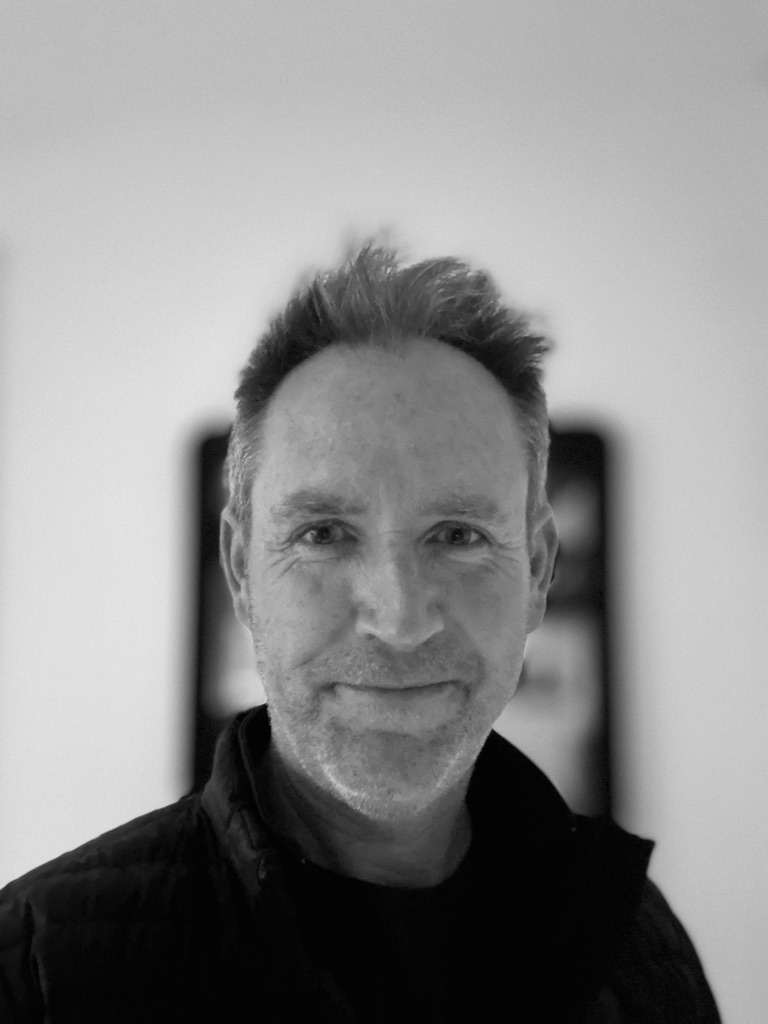
Chris Brook is a golf performance coach, author and TrackMan Master Professional with approximately three decades devoted to coaching and investigating golf performance. His work brings biomechanics, performance psychology and performance identity together through the Clarity Method.
The assessment is not designed to impress a golfer with the volume of available technology. Measurement is used to test a useful question, challenge assumptions and clarify what deserves attention next.
Frequently asked questions
The bookable Complete Golf Game Assessment lasts three hours. It provides enough time to build a broad baseline, investigate the most relevant interactions and agree clear priorities without pretending every part of golf can be tested exhaustively in one visit.
Not to the same depth. The assessment is priority-led. Conversation, existing evidence and representative tasks determine which areas need detailed measurement and which need only enough review to place them in context.
The three-hour assessment is centred on building the most useful baseline within the agreed setting. Course behaviour can be explored through history, statistics and representative tasks. Direct on-course observation is included only when agreed in advance and practical within the session; otherwise it is arranged separately.
No. A dedicated 3D biomechanical analysis examines a specific movement, force or club-delivery question in greater depth. The complete performance assessment is broader and is intended for golfers whose priorities or interacting limitations are not yet clear.
No. Any physical screening is used only to inform golf coaching and movement choices. It does not diagnose injury, provide treatment or replace assessment by an appropriately qualified healthcare professional.
No. Online coaching can review video, playing statistics and data the golfer already has, but it cannot reproduce the studio systems or the same in-person testing environment. It is a separate service rather than an equivalent remote version.
The live booking calendar shows the current price and available dates for the three-hour Complete Golf Game Assessment. If you are unsure whether this assessment or a shorter session is appropriate, contact Chris before booking.
Next step
If several parts of your game are interacting and you need a hierarchy before committing to change, choose the three-hour Complete Golf Game Assessment. If the problem is already narrow, describe it first and Chris will help you avoid booking more time than the question requires.