Expectation and control
How demanding certainty from an uncertain game increases pressure and changes the way the golfer approaches the shot.
Golf performance psychology book
Understand why your golf changes when score matters—and what to build so pressure no longer decides which version of your game is available.
Quiet the Mind, Lower the Score is Chris Brook’s long-form study of expectation, confidence, perception, attention, emotion and performance identity in golf. It is written for players who can practise well, know they possess the ability, yet experience a very different game when consequence becomes real.
This is not a collection of slogans or a demand to think positively. It gives the golfer a clearer way to understand self-interference, recover from mistakes and develop performance that is less dependent on recent results.
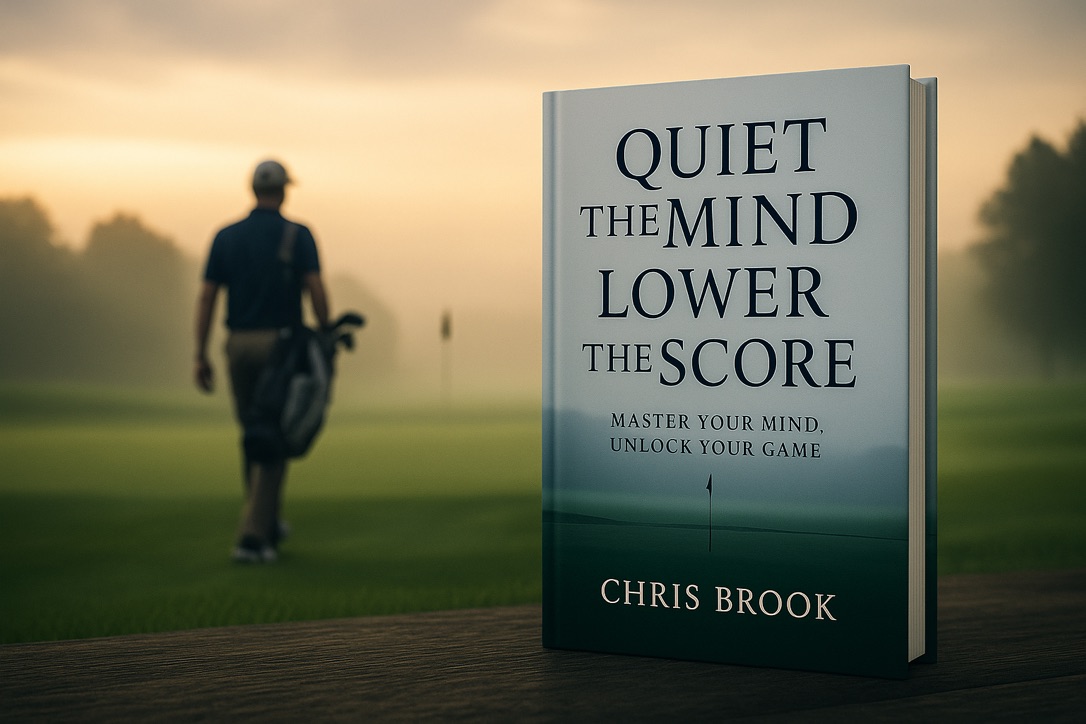
Why the book exists
Many golfers assume that poor competitive performance proves their technique has disappeared. More often, the conditions surrounding the technique have changed. Score adds consequence. Consequence alters attention, perception, decision-making and muscular freedom. A player who moves naturally in practice may begin steering, protecting or judging the movement when the same shot carries meaning.
The book examines this change from the golfer’s point of view. It explains why one poor shot can spread into several holes, why confidence built on recent outcomes is fragile, why the pursuit of control can make performance less stable and why technical knowledge alone does not guarantee access to skill on the course.
Its purpose is not to remove every uncomfortable thought or feeling. It is to help the golfer understand what is happening clearly enough to respond differently and stop adding further damage to the original shot.
Inside the book
The book treats pressure as part of a wider performance system. Each theme helps explain why the same golfer can experience the game so differently from one environment to another.
How demanding certainty from an uncertain game increases pressure and changes the way the golfer approaches the shot.
How consequence changes what the golfer notices, how danger is interpreted and why familiar shots can suddenly look or feel different.
Why confidence that depends on recent results is easily disturbed, and why trust must be able to survive imperfect evidence.
Why attention can collapse inward at the wrong moment and turn a learned movement into something the golfer attempts to supervise consciously.
How performance becomes personal evidence and why a shot becomes more threatening when it appears to say something about the golfer.
How the response after a mistake determines whether it remains one event or becomes the beginning of a destructive sequence.
What makes it different
The book does not ask the golfer merely to be confident, stay positive or follow a routine. It investigates why confidence becomes fragile, why thought becomes louder, why attention changes and why the desire to control can disrupt the movement it is trying to protect.
The practical value lies in recognising what is being revealed during the round. The golfer learns to observe emerging patterns, separate the shot from its emotional aftermath and continue building rather than chase immediate relief.
“Previously my demeanour while playing fluctuated between disappointment and anger. Thanks to the book and the techniques within it, today I played with an air of calm and peace… it’s changed my entire outlook on the game.”
Jim, UK golfer
Book information
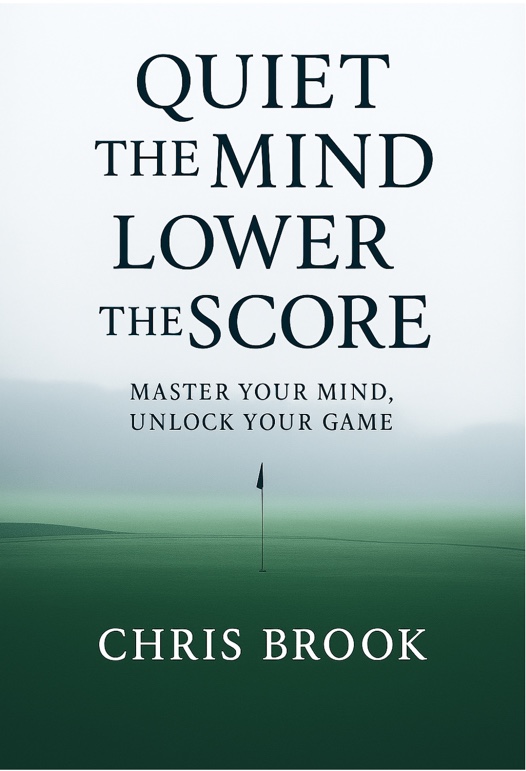
Quiet the Mind, Lower the Score is available through Amazon UK and Amazon US in digital and printed formats.
Related reading
These long-form articles connect the book’s central themes to perception, visual control and the difficult gap between understanding and implementation.
Perception, awareness and why visual control is often misunderstood in golf performance.
A more exact look at imagery, intention and when visualisation helps or hinders the player.
Why insight and explanation do not always transfer cleanly into on-course performance.
Read more about biomechanics, technique, performance psychology, scoring, putting, speed and player development.
Where to go next
Choose the digital course when you want the book’s performance-psychology ideas extended through structured audio teaching and workbook-based study.
Explore the CourseChoose one-to-one coaching when you want your own pressure patterns, emotional responses, attention shifts and scoring behaviour investigated directly.
Explore Psychology CoachingSee every book and course, plus the upcoming podcast and webinars, on the Learn page.
The foundation
If pressure, expectation or emotional reaction changes the golf you can access, Quiet the Mind, Lower the Score is the foundation. Read the book first; use the course or coaching when you want to study or apply the framework more deeply.