The change keeps disappearing
A position looks better on video, yet the old delivery returns as soon as you swing harder. Measurement shows what changed elsewhere to compensate.
Golf Biomechanics Coaching Near Bournemouth, Dorset
Ever been told to fix a position, only to watch the old miss come straight back? Video shows what your swing looks like. It can’t show where your speed leaks, how you use the ground or why the face arrives open. This in-person assessment links your body, the ground, the club and the ball on every shot, then turns what it finds into one or two clear priorities you can actually train.
Why Measure
You can see the poor strike, the curve or the lost speed without knowing which part of your movement is responsible. That’s exactly when comparing several streams of evidence at the same moment pays off.
A position looks better on video, yet the old delivery returns as soon as you swing harder. Measurement shows what changed elsewhere to compensate.
You put in the effort but the club speed doesn’t follow. Force, sequence and delivery are examined together rather than guessed at.
Different coaches have seen different faults and given different fixes. Synchronised data shows which feature actually matters to your shot.
Face, path, strike or low point keep varying. The assessment works backwards from the measured result to the movement behind it.
The aim isn’t the biggest report. It’s knowing what the evidence supports, what already works and the one priority worth training next.
Three Connected Views
Each system answers a different part of the question. The value comes from syncing them and interpreting them together, not from treating any single number as an ideal every golfer must copy.
Club speed, attack angle, path, face angle, dynamic loft, spin loft, impact location, ball speed, launch, spin and carry.
Pressure under your feet and ground reaction force in three dimensions, so the timing and direction of force can be seen alongside the swing.
How segments such as the pelvis and thorax move and rotate, and how that movement is organised through the swing.
Selected, not performed for show. Some questions need all three systems; others need far less. You’ll only be measured for what makes the next decision clearer.
From Numbers to a Coaching Decision
The same visible swing feature can appear for completely different reasons. Shot, club, ground and body data are compared before deciding what should, or shouldn’t, change.
| Observed problem | Evidence compared | Question the assessment explores |
|---|---|---|
| Unstable start line or curvature | Face angle, club path, face-to-path, impact location and body motion | Which measured variable is changing first, and what movement is associated with that change? |
| Inconsistent low point or strike | Attack angle, low point, impact location, pressure movement and segment motion | Is the strike pattern linked to setup, movement timing, force use or a combination? |
| Club speed below your potential | Club speed, swing radius, force-time data and body-segment velocities | Where is speed being created, interrupted or reorganised, and what do you naturally use well? |
| Movement changes at higher effort | Lower- and higher-speed captures across body, ground, club and ball data | Which part of the organisation changes as intent rises, and which elements stay stable? |
| A technical change won’t stick | Baseline capture, coached intervention, re-test and your reported feel | Did the intended movement change, did delivery improve, and is the cue producing the response claimed? |
These are example questions, not preset diagnoses. No force pattern, position or sequence is labelled good or bad without considering you, the task and the resulting shot.
Assessment Structure
From your story, to capture, to interpretation, to a practical test. You should leave understanding the conclusion, not just having seen the data.
Your ball flight, strike pattern, coaching history, physical considerations, current feels and what changes under speed or pressure.
Representative shots are recorded before anything is corrected, using the systems that suit the problem.
Body, ground, club and ball are compared. One useful change is introduced, then re-measured rather than assumed to have worked.
You leave with the explanation that matters, a narrow set of priorities and a practice plan. Follow-up is only suggested where it serves that plan.
Bring with you
Leave with
The Wider Framework
The systems measure movement and delivery. They can’t explain why you lose a move under pressure, or what your golf means to you. Those questions belong to the wider coaching.
How you move, use force and deliver the club. This is where 3D capture, force-plate data and TrackMan give objective evidence.
How attention, intention, pressure, trust and emotion affect your access to the movement. Coached, not read off a graph. Golf psychology coaching
How your self-story and what success or failure mean to you shape decisions, effort and behaviour when the game matters.
Biomechanical data answers an important part of the problem, not the whole of the golfer.
A Precise Scope
Studio or Remote
The force plate, TrackMan and motion capture have to record you in person near Bournemouth. Online coaching is still valuable, but it’s a different service with different evidence.
In the studio
You want body, ground, club and ball measured together, or a technical question has resisted simpler observation and coaching.
Online
You can’t travel to Dorset and want live coaching through FaceTime, with Chrome Remote Desktop available if you have a connected launch monitor and camera.
Coach and Interpreter
The technology doesn’t replace coaching judgement. It makes the question sharper, exposes assumptions and proves whether a change really worked.
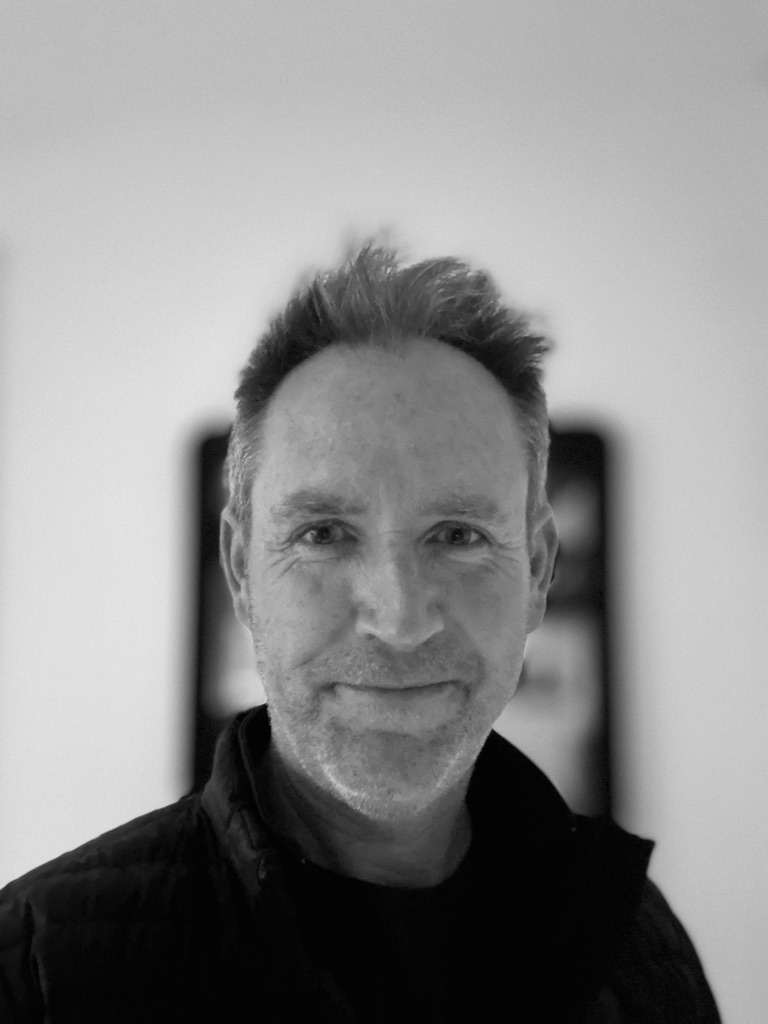
Chris Brook is a golf performance coach, author and TrackMan Master Professional with 31 years devoted to coaching and investigating golf performance. His work brings biomechanics, golf psychology and performance identity together through the Clarity Method.
Players coached include tour professionals, England international Jenson Bull and Lee James (former Walker Cup player, Amateur Champion, Challenge Tour Order of Merit winner and European Tour professional), as well as county players and keen golfers.
Frequently Asked Questions
The assessment can compare TrackMan club and ball data, SwingCatalyst pressure and three-dimensional ground reaction force data, and full-body movement data. The systems are interpreted together to clarify how movement and force use relate to club delivery and ball flight.
It answers a different question. Traditional coaching relies mainly on what the coach can see on video and in the ball flight. Biomechanics-focused coaching adds measurement of how the body moves, how force is applied to the ground and what the club delivers, so the cause of a problem can be separated from its symptom. Its value depends on interpretation: the data has to be turned into one or two clear priorities, and the change still has to hold up under pressure, which is why Chris combines it with golf psychology.
In Chris Brook's studio: TrackMan 4 for club delivery and ball flight, a SwingCatalyst 3D Motion Plate for pressure and three-dimensional ground reaction force, and full-body 3D motion capture for how the pelvis, thorax and other segments move through the swing. The systems are synchronised so body, ground, club and ball can be compared on the same shot.
A normal lesson usually starts with a visible fault and a fix. This assessment starts by measuring what is actually happening, protecting what already works, and testing whether a change improves delivery before it becomes a practice priority. Golfers who want coaching without a full multi-system assessment can book a standard one-to-one session.
Not necessarily. The technology is selected according to the golfer's question and the information needed. The purpose is to answer the problem clearly, not to collect every available number.
No. The combined 3D assessment requires the studio equipment and is completed in person near Bournemouth. Online coaching can use clear video and any data the golfer already has, but it is a separate service and is not presented as equivalent to studio capture.
No. This is a golf coaching and performance service, not a medical diagnosis or treatment. Golfers with pain, injury or clinical restrictions should seek advice from an appropriately qualified healthcare professional and share any relevant guidance before participating.
A 90-minute session is normally the best starting point for a new golfer. If the intended scope is unusually broad, contact Chris before booking so the appropriate session length can be agreed.
The live booking calendar shows the session lengths currently offered, their prices and all available dates and times.
Next Step
Know a 3D assessment is right for you? Pick a session in the live calendar. Not sure whether you need multi-system analysis or a standard one-to-one? Describe the problem and Chris will help you choose.