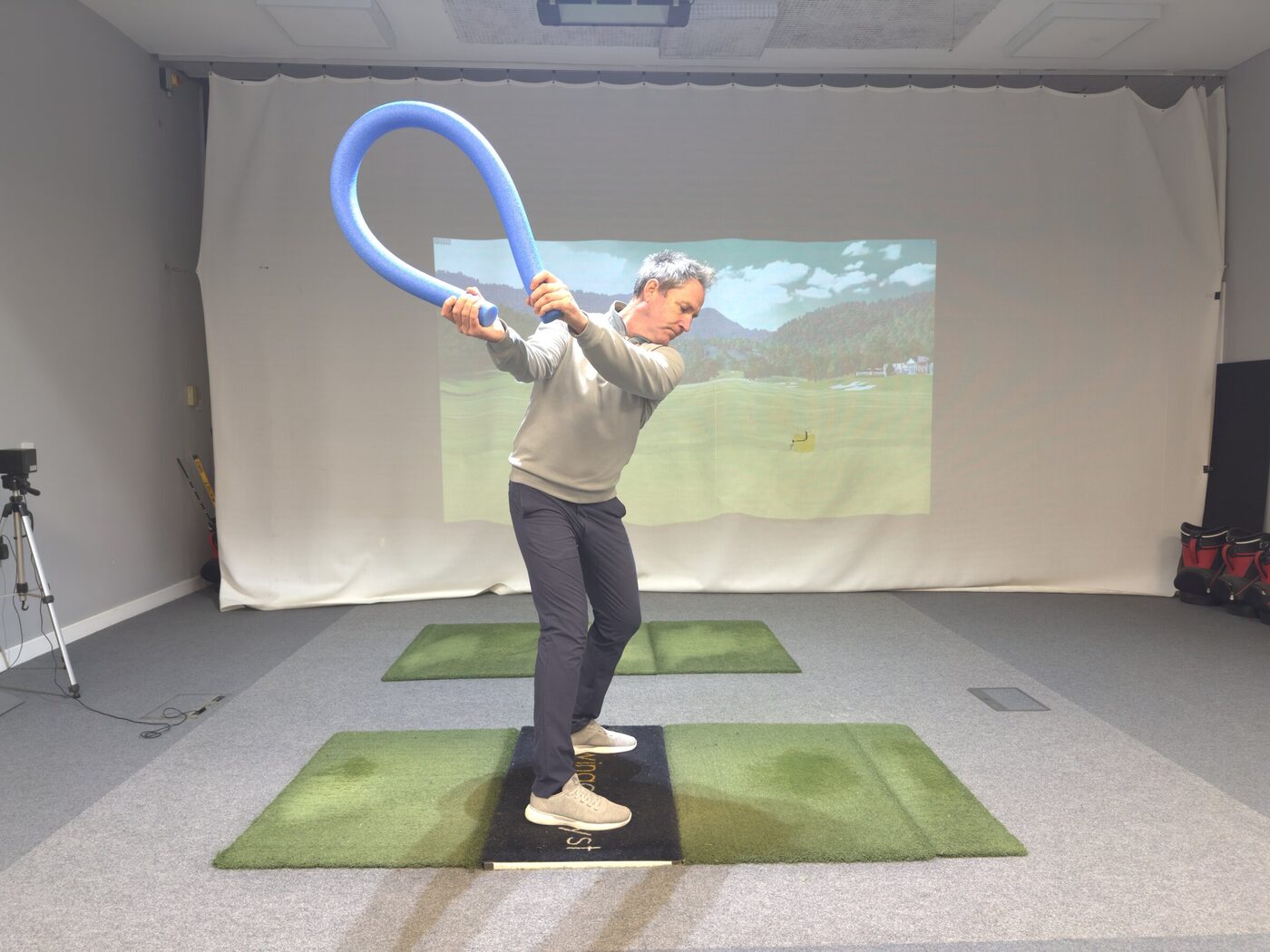
It teaches the body to lead and the "club" to follow: ground, pelvis, torso, arms, then the noodle. When that order is right, the noodle stretches, lags and whooshes through in front of you, along the line your feet, hips and shoulders set at address. That is a neutral swing direction, and it is what keeps your club path, and your ball flight, predictable.
Why a Pool Noodle?
A pool noodle is the most honest training aid I own. Bend it into a loop, hold both ends like a grip, and swing: it will only behave if your body moves in the right order. Snatch at it with the hands and arms and it folds, flops and points wherever it likes. Let the ground, the pelvis and the torso lead, and it stretches out, lags, and then whips through with a satisfying whoosh.
That is the whole point. The noodle has length, a little weight and a lot of flex, so it exaggerates everything. It turns sequencing, width and release into something you can see and hear. It also traces your swing direction through the bottom of the arc, so you can check that the club is travelling along the line your body set at address, not across it.
Address: Your Body Sets the Swing Direction
Before anything moves, your feet, hips and shoulders draw a line. That line is your intended swing direction, and the job of the swing is to deliver the club back along it.
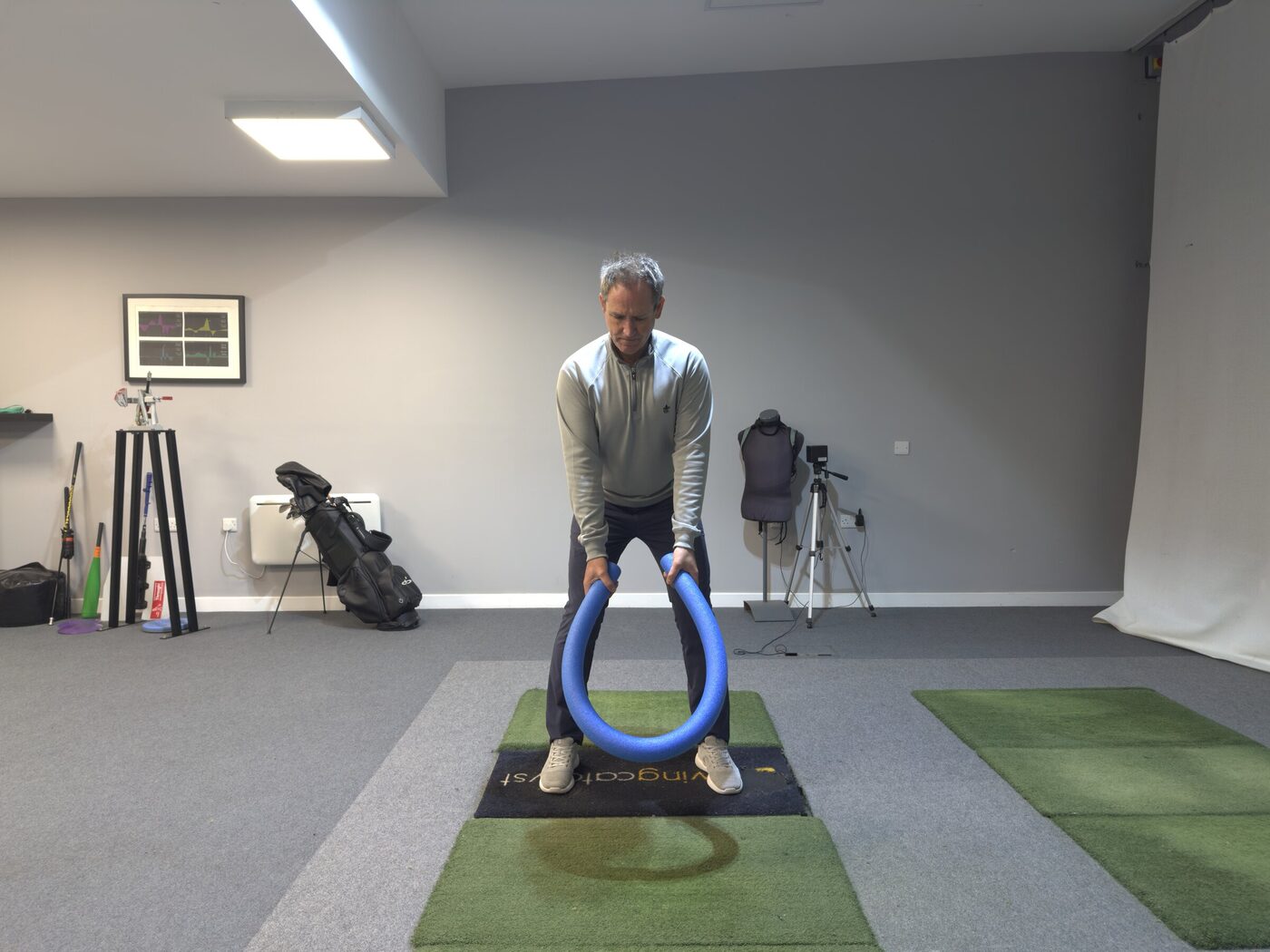
- Bend the noodle into a loop and hold both ends together in your normal grip, so the loop hangs down like a clubhead.
- Take your normal posture: hinge from the hips, soft knees, arms hanging, weight balanced through the middle of the feet.
- Square your feet, hips and shoulders to each other. Lay a club or alignment stick on the floor along your toe line if it helps; that is your reference for the rest of the drill.
If your body lines disagree at address (feet one way, shoulders another), the noodle will tell you later, because it will swish through on a line that matches none of them.
What Swing Direction Means
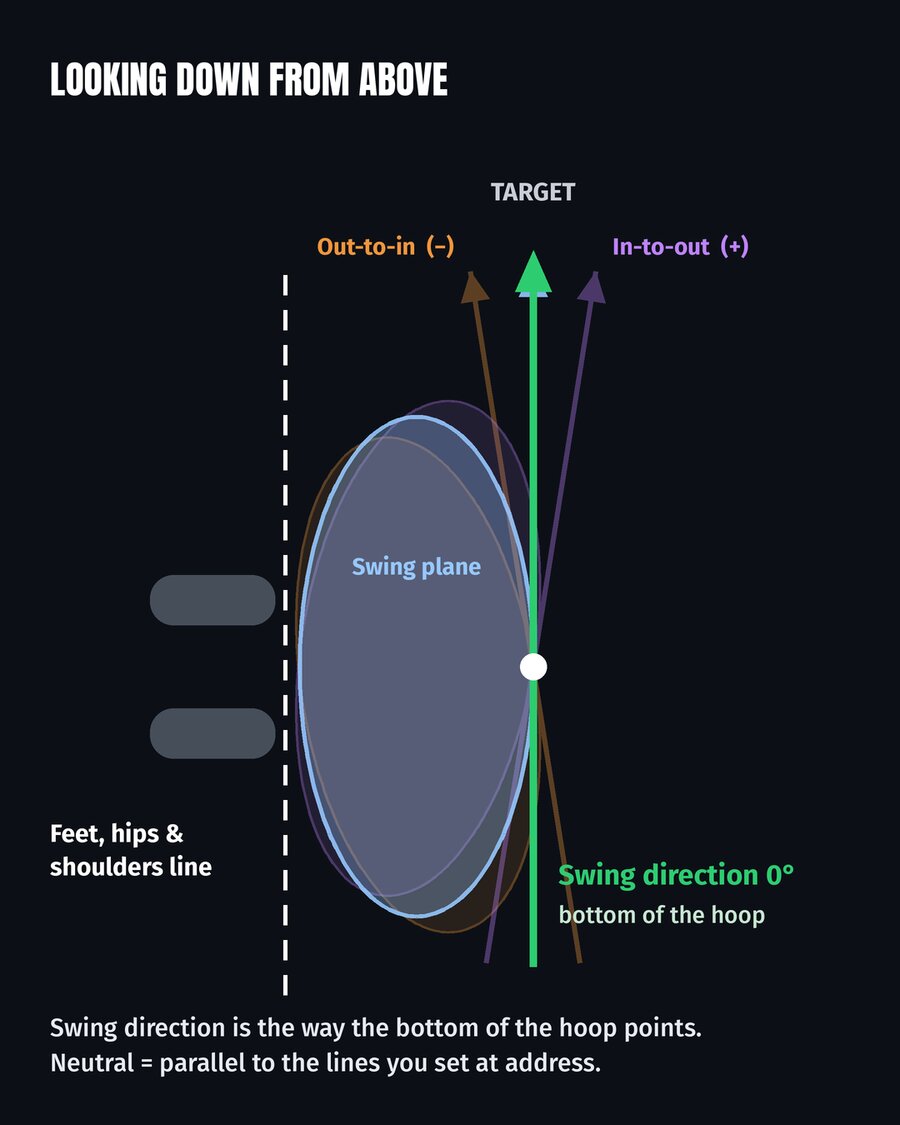
Swing direction is the way your swing arc points along the ground at the bottom. In The Shot Explorer I show the swing plane as a tilted hoop. Look down on it from above, find the bottom of the hoop, and the direction it points is your swing direction (the green line). Plus means right of the target, minus means left, for a right-hander.
Your set-up decides where that hoop wants to point. The swing turns around your body, so the arc is shaped by the lines your feet, hips and shoulders draw at address. When the swing direction matches those lines, it is neutral. When the shoulders spin open and the arms swing across, the hoop turns left and the swing direction goes negative (out-to-in). When the body stalls and the hands throw the club outwards, the hoop turns right and it goes positive (in-to-out).
- Swing direction: the direction the whole swing is heading along the ground, at the bottom of the arc.
- Club path: the direction the clubhead is travelling as it hits the ball.
- Attack angle: whether the club is travelling down or up into the ball.
- Face (face angle): where the clubface points when it hits the ball. It decides most of where the ball starts.
- Face to path: the difference between face and path. It decides which way, and how much, the ball curves.
Swing Direction and Ball Flight
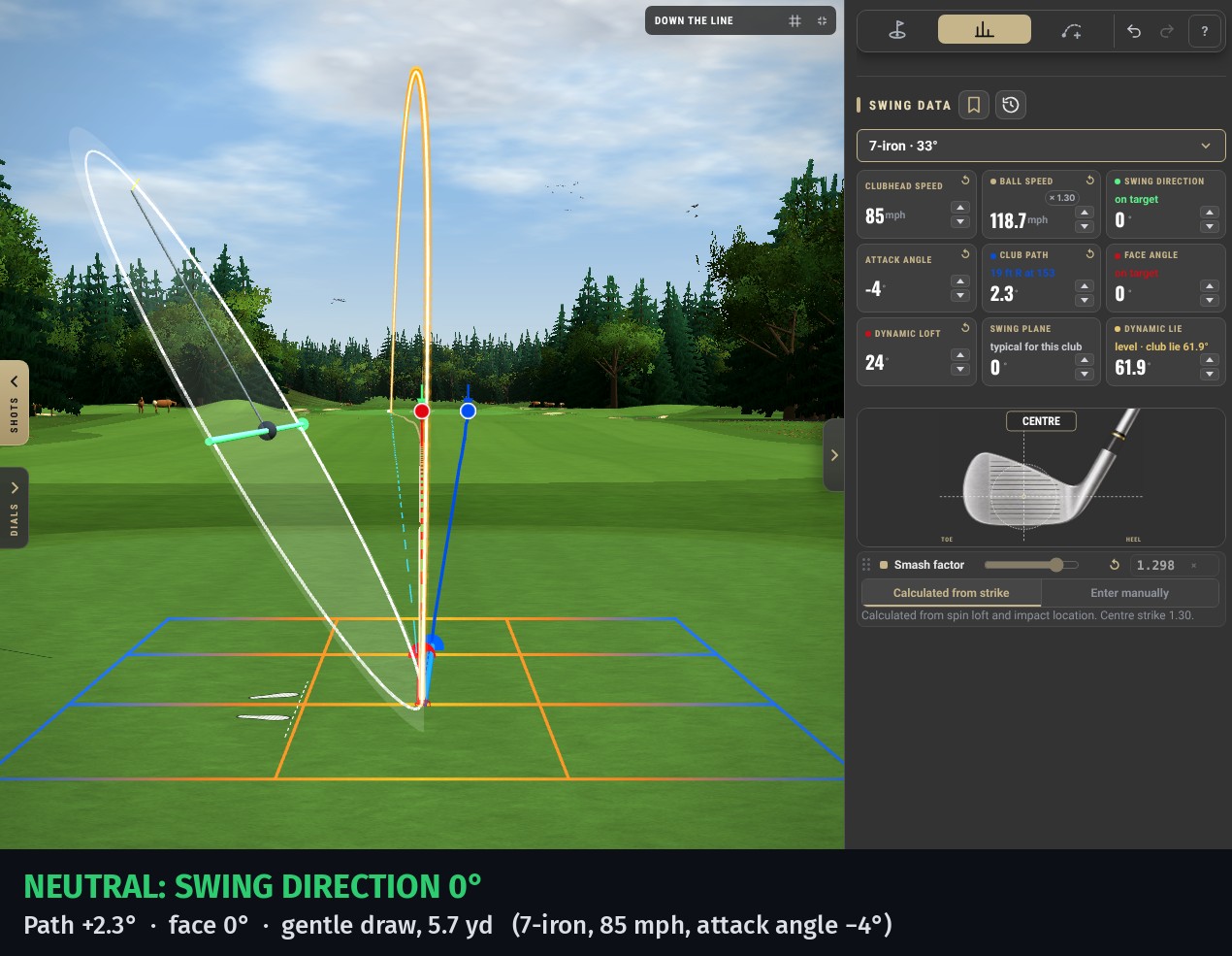
Swing direction doesn't decide the ball flight on its own, but it is where the club path comes from. In The Shot Explorer the blue club path is the clubhead's "shadow" on the ground. With an iron you hit down on the ball, which sends the path a couple of degrees right of the swing direction. The face (red) then decides how much the ball curves, because curve comes from the face pointing away from the path.
I ran the same 7-iron through The Shot Explorer three times: 85 mph, attack angle −4°, face square to the target. The only thing I changed was the swing direction.
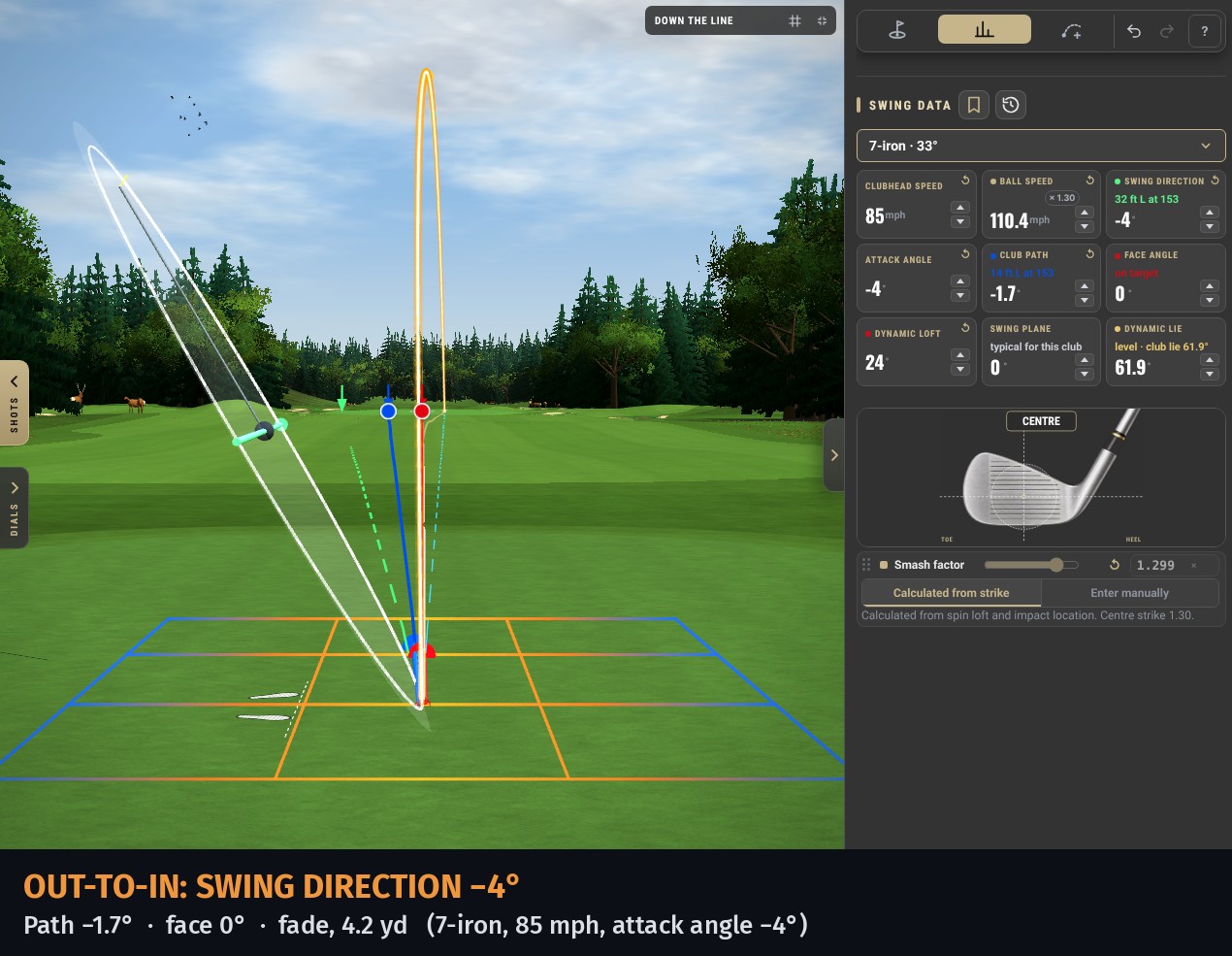
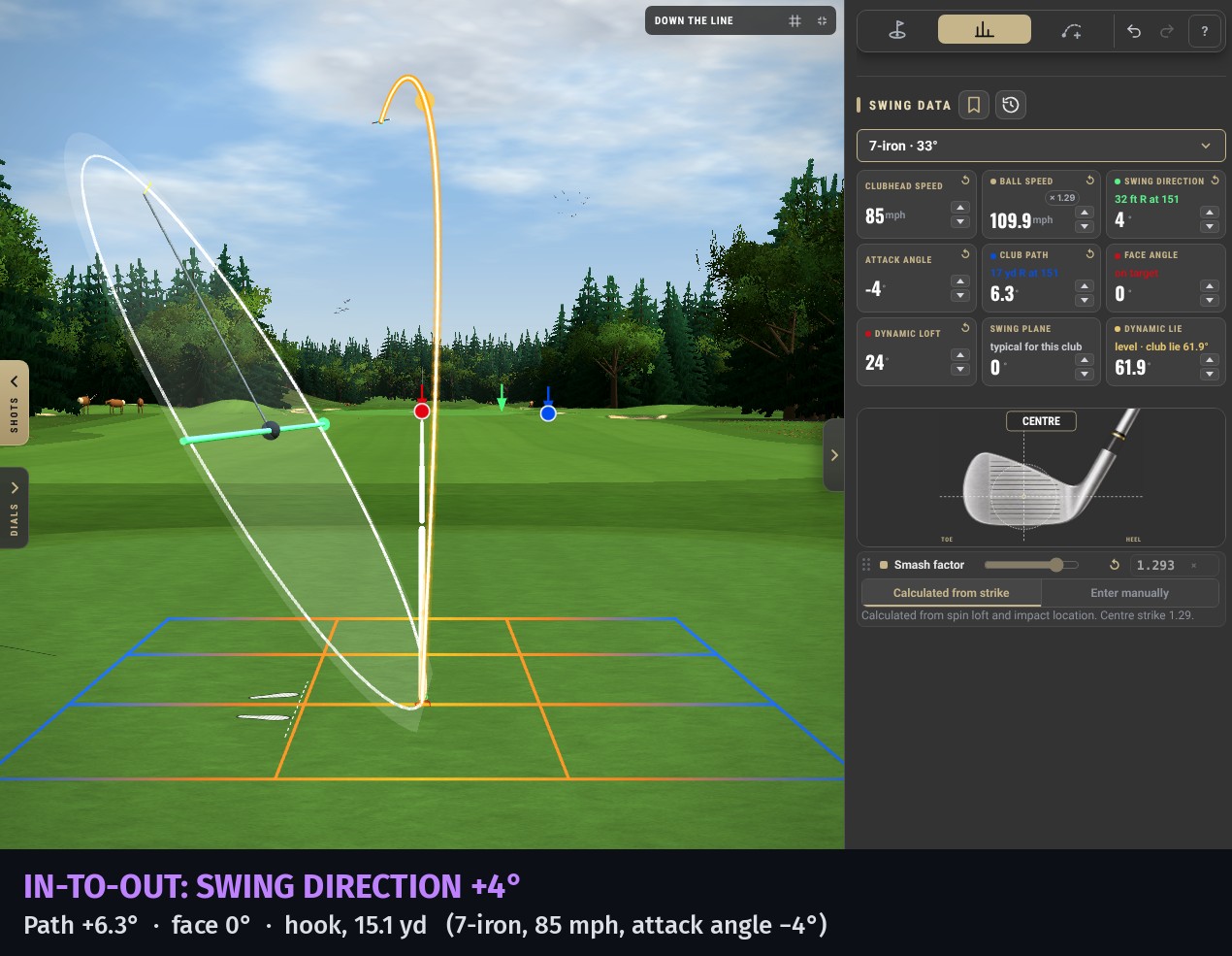
| Swing direction | Club path | Face | Curve | Carry |
|---|---|---|---|---|
| 0° (neutral) | +2.3° | 0° | 5.7 yd left (gentle draw) | 152.8 yd |
| −4° (out-to-in) | −1.7° | 0° | 4.2 yd right (fade) | 152.9 yd |
| +4° (in-to-out) | +6.3° | 0° | 15.1 yd left (hook) | 151.0 yd |
Four degrees either side of neutral turns a gentle draw into a fade or a hook, with the face pointing at exactly the same place. That's why the noodle drill matters: if the body organises the swing so the arc follows the lines you set at address, the swing direction stays neutral. The path then sits where you expect it, and the face only has to do a small, repeatable job.
Backswing: Load It Wide, Let It Wrap
The noodle hates a narrow, handsy takeaway. Pick it up with the hands and it collapses straight away.
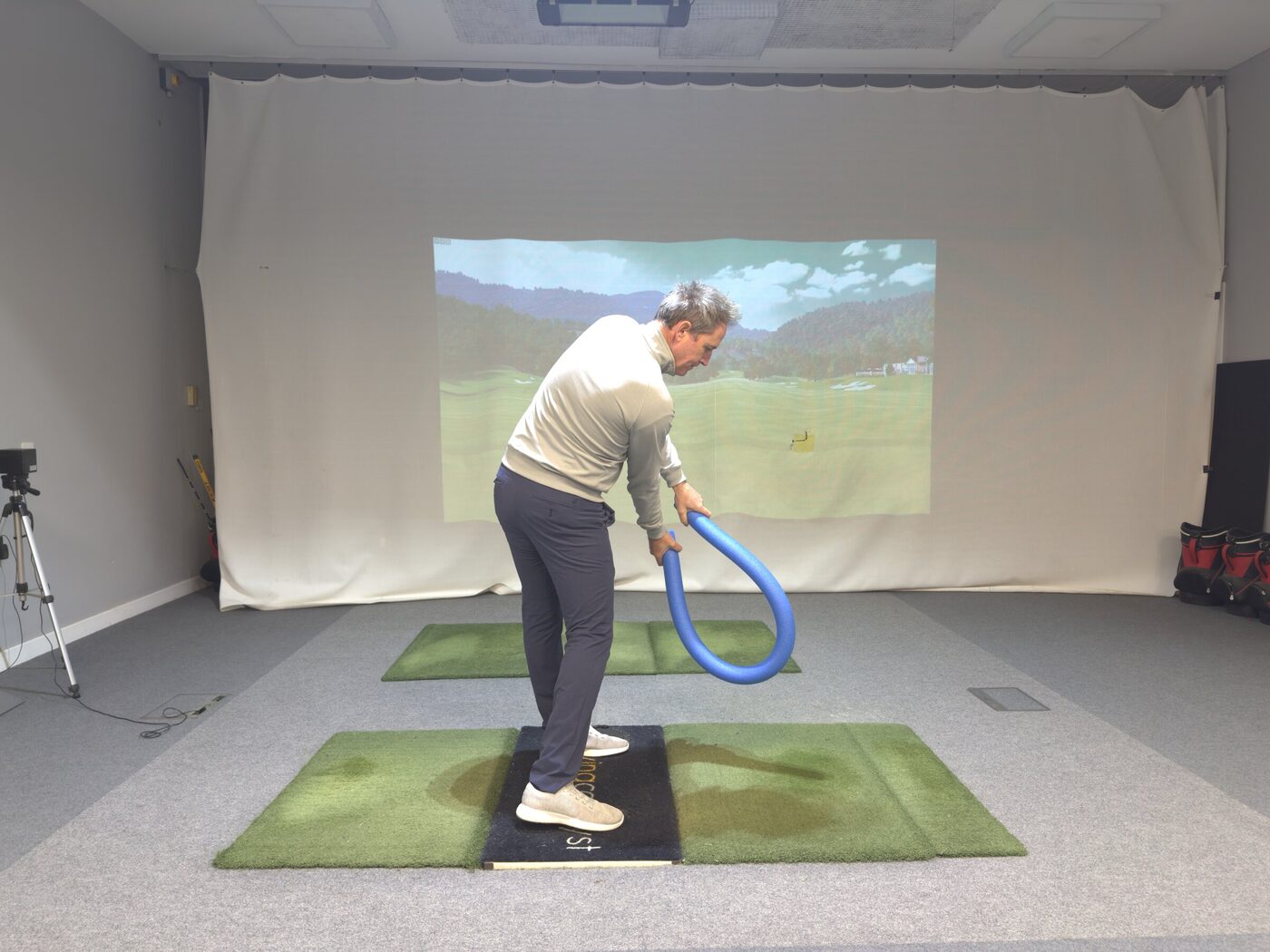
- Takeaway. Turn the chest and let the arms stay long. By hip height the noodle should be stretched out horizontally behind you, roughly parallel to your toe line. Width first, lift second.
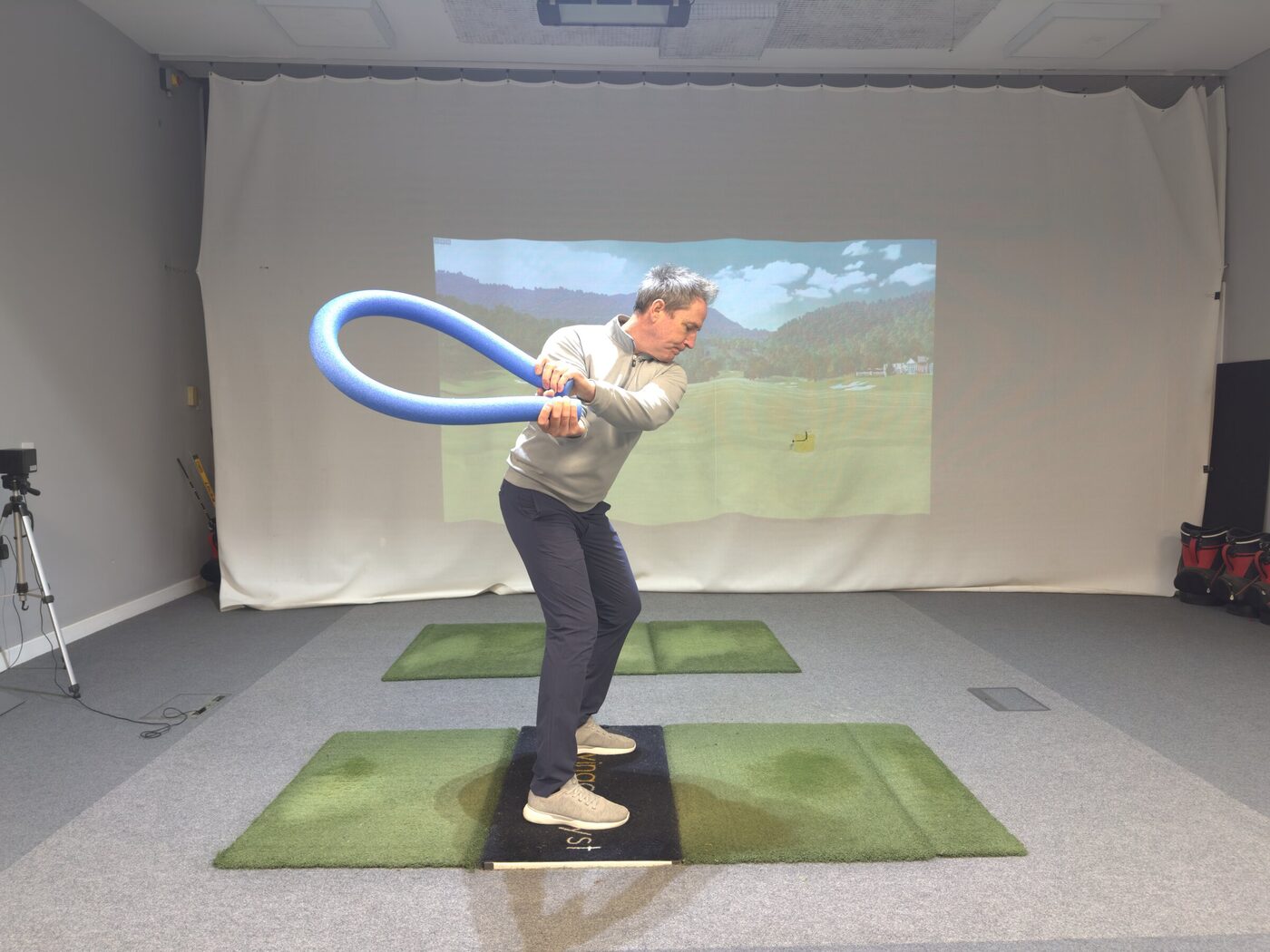
- Into the top. Keep turning while the arms swing up. The loop flips over your trail shoulder and opens into a big, round shape above and behind you. Pressure moves into the trail side, but the head stays centred over the ball.
- The wrap. At the top, feel the noodle's weight pulling the hands back and away. That stretch is stored energy. Don't fight it and don't rush it.
The feeling to keep is "turn and stay wide". If the loop ends up tangled behind your head or slaps you on the back, the arms have outrun the body.
Transition and Delivery: Ground First, Noodle Last
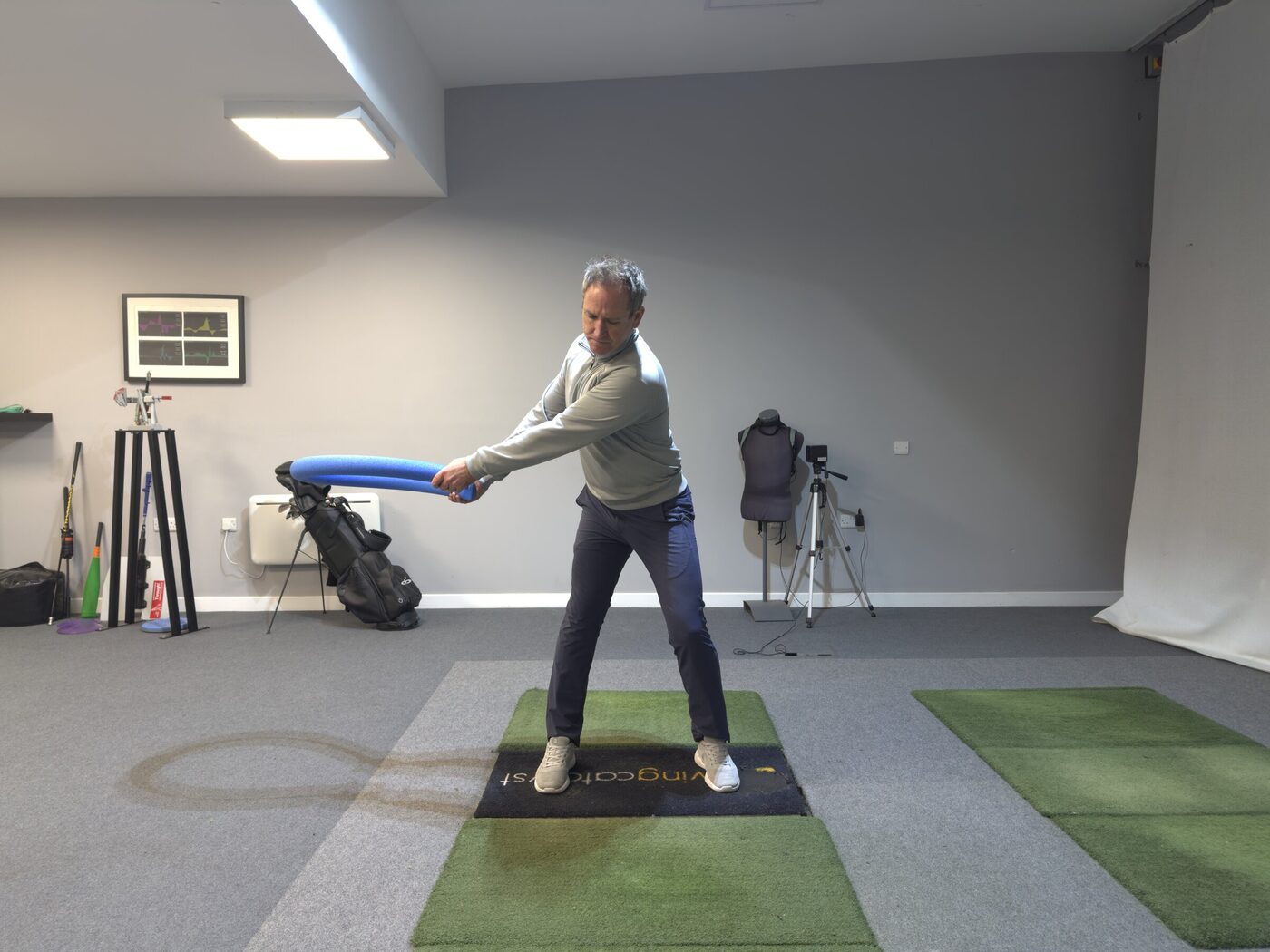
This is where the noodle earns its place. If you start the downswing with the hands and shoulders, it whips out and over, and the whoosh happens early and across the line. To deliver it properly, the order has to be:
- Ground. Pressure shifts into the lead foot while the noodle is still finishing the backswing.
- Pelvis. The lead hip clears and opens.
- Torso. The chest follows the hips.
- Arms. The arms drop into the slot in front of the trail hip.
- Noodle. Last of all, the loop drops behind the hands and trails them, then releases.
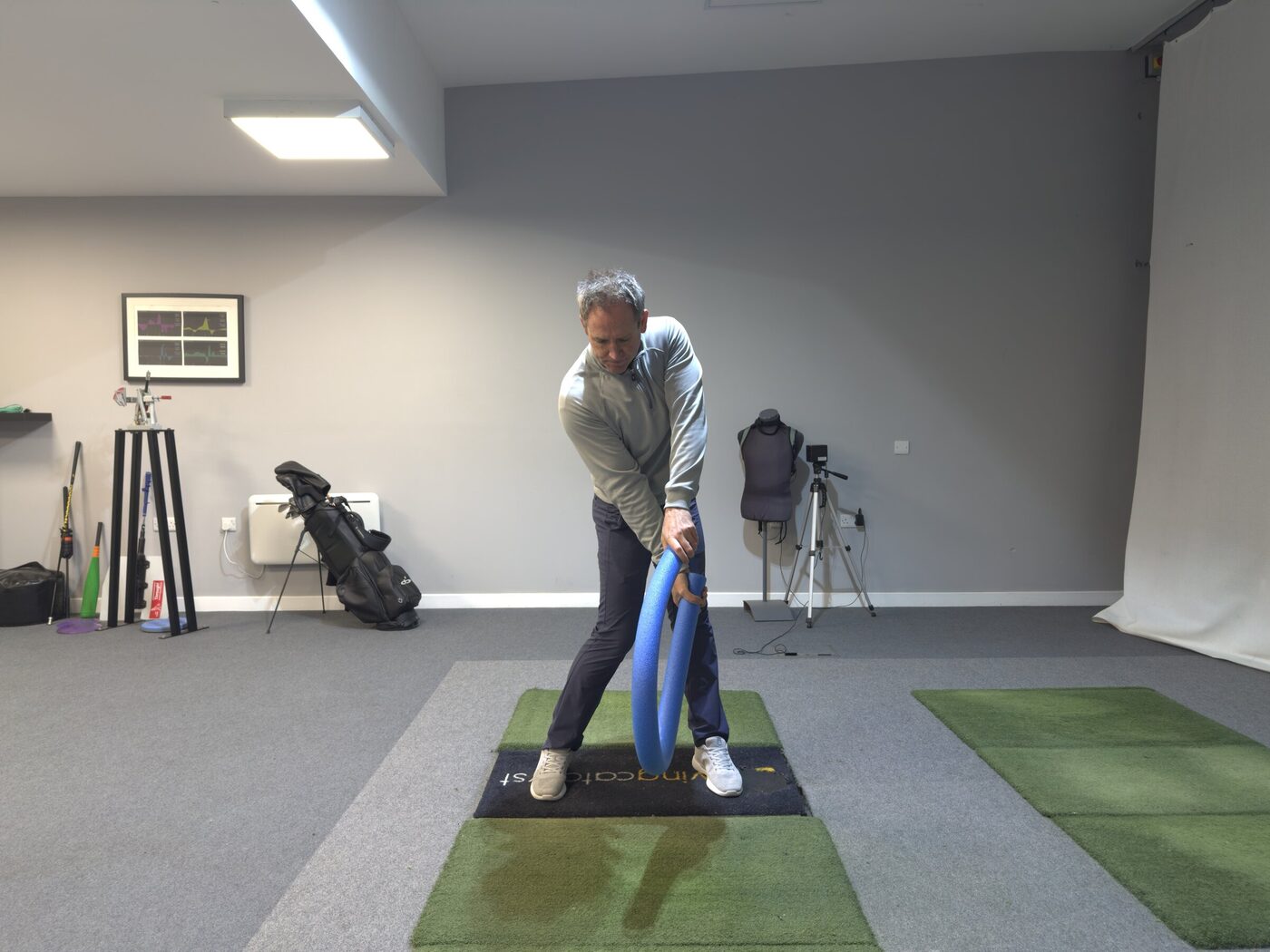
In the delivery position the hands are leading and the noodle is hanging back behind them. That lag is not something you create with the wrists; it's what happens when the body leads. You'll feel the noodle getting heavier as you approach the ball, which tells you the energy is moving outwards from the centre, exactly as it should.
Impact and Finish: Athletic Strike, Neutral Direction
At impact the body is open, the lead side is posted up, the trail heel is coming off the ground and the hands are ahead. The noodle should whoosh at the bottom of the arc, in front of you, not before you get there.
Now watch where it goes. The noodle is a swing-direction tracer:
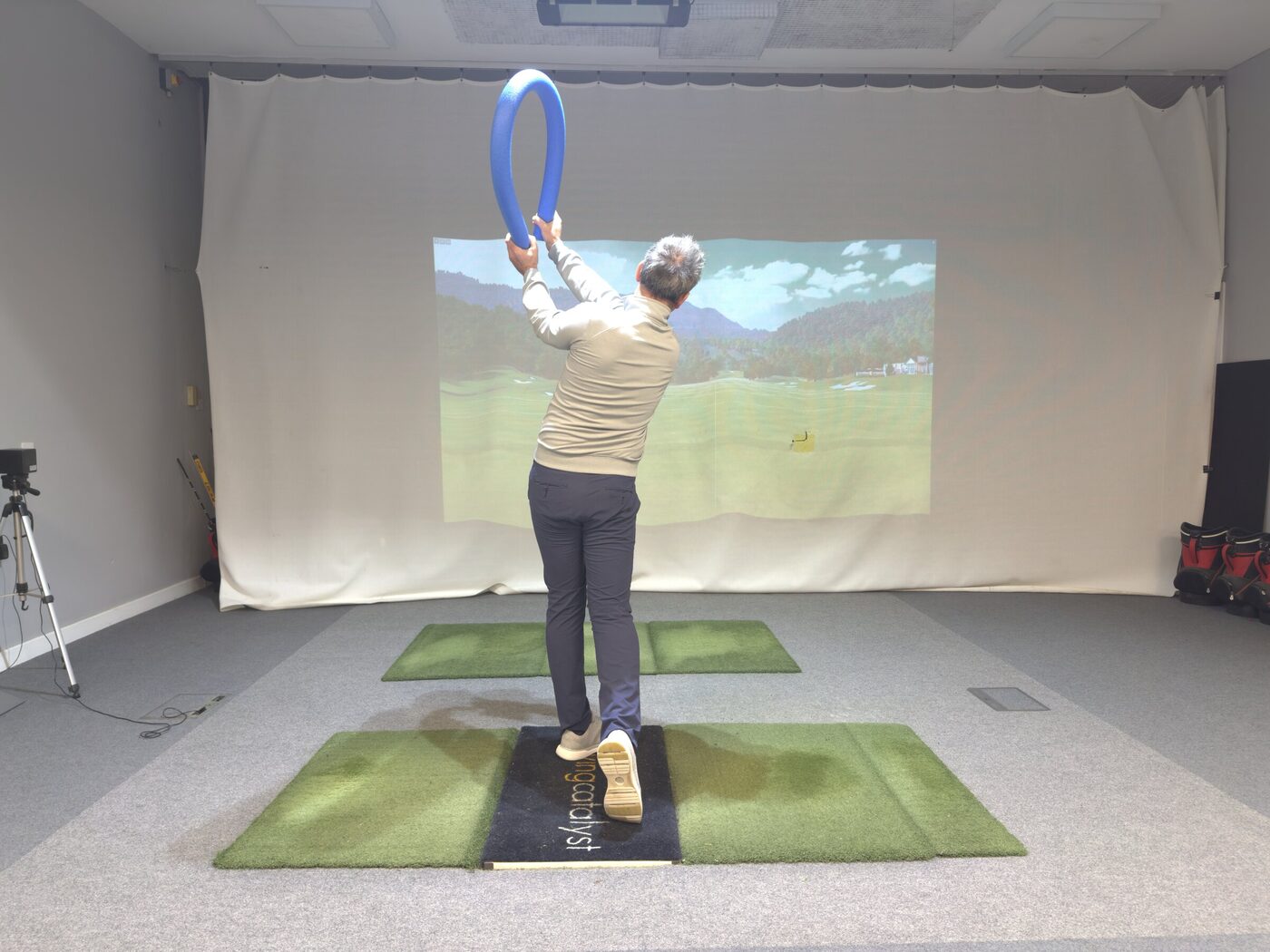
- Neutral. The loop swishes through low and along your toe line, then climbs up the target side and finishes overhead. The direction matches the line your feet, hips and shoulders set at address.
- Out-to-in. The noodle sweeps across your body and finishes low and left (for a right-hander). Usually the shoulders and arms started the downswing.
- Excessively in-to-out. The noodle flings out to the right and the body stalls. Usually the hips stopped turning and the hands flipped.
From the down-the-line view, a good rep shows the body fully rotated, trail foot up on its toe, chest facing the target, and the noodle rising vertically above the head before wrapping softly behind it. Hold that balanced finish for a count of three.
How to Practise It
Use the noodle as a warm-up and as a reset between shots. Ten good reps are worth more than fifty rushed ones.
- Five slow rehearsals. Half speed, pausing at the top. Check the width going back and the noodle trailing the hands coming down.
- Five full-speed swings. Listen for the whoosh. It should happen in front of you, at the bottom of the arc.
- Five swings with a stick on the floor. Watch the noodle travel along the stick through the bottom, then finish high.
- Hit balls. Take one noodle swing, then hit a shot trying to copy the same rhythm and sequence. Alternate for ten balls.
| Fault | What the noodle does | Fix |
|---|---|---|
| Hands start the downswing | Whips out early, whoosh before the ball | Feel pressure into the lead foot first; let the noodle wait at the top |
| Narrow takeaway | Collapses and folds going back | Turn the chest with long arms; get width before lift |
| Shoulders spin open | Sweeps across, finishes low left | Let the arms drop into the slot before the chest opens |
| Body stalls | Flings out right, hands flip | Keep the hips turning through to a full finish |
| Lost balance | Finish wobbles or falls back | Slow down; hold the finish for a count of three |
Final Conclusion
The noodle can't be muscled. It only works when the body supplies the motion and the arms and "club" are allowed to follow, so it trains the very sequence that produces a dynamic, athletic strike.
And because it traces the bottom of the arc so clearly, it shows you straight away whether that motion is travelling along the line your feet and body set at address. The Shot Explorer shows why that matters: four degrees of swing direction either side of neutral turns the same square face into a fade or a hook.
Get a noodle, bend it into a loop and give it ten minutes before your next session. Organise the body, and the swing direction looks after itself.
Questions About Swing Direction
What is swing direction in golf?
Swing direction is the direction the bottom of your swing arc points along the ground, measured against the target. Plus means right of the target and minus means left, for a right-handed golfer. It is shaped by the lines your feet, hips and shoulders set at address and by how your body sequences the downswing.
Is swing direction the same as club path?
No. Club path is the direction the clubhead is travelling at impact. With an iron, hitting down moves the path to the right of the swing direction; hitting up moves it to the left. In the Shot Explorer test, a neutral swing direction with a −4° attack angle gave a +2.3° path.
What does swing direction do to ball flight?
It sets where the club path comes from, and the face then decides the curve. With the same 7-iron and the face square to the target, 0° gave a gentle 5.7-yard draw, −4° gave a 4.2-yard fade and +4° gave a 15.1-yard hook.
Why use a pool noodle instead of a club?
The noodle's length, weight and flex exaggerate sequencing errors. If the hands or shoulders lead, it folds or whips out early. If the ground and pelvis lead, it stretches, lags and releases in front of you, along the line you set at address.