The Purpose of This Hub
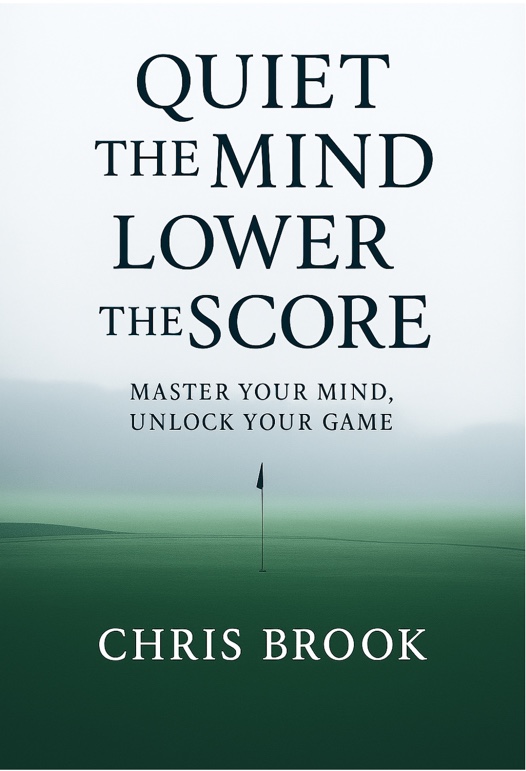
Quiet the Mind, Lower the Score establishes a structured way of understanding why golf performance changes under pressure. This hub gives those ideas room to continue developing through new examples, deeper explanations and supporting articles.
It has three purposes:
- To expand the central ideas introduced in the book.
- To explain more clearly the psychological forces that shape golf performance.
- To organise further reading into a coherent, growing body of knowledge.
It is not a collection of disconnected mental tips. It is the place where the book’s inquiry continues.
The Book’s Central Question
Why does performance become unstable when a golfer still knows what to do and may still possess the technical ability to do it?
Mechanics alone cannot provide a complete answer. The question leads into perception, expectation, attention, emotional disturbance, confidence, identity and the changing meaning of the shot under pressure. The book introduces this framework; the hub allows each part of it to be examined in greater depth.
Beyond Technique: The Psychological Structure of Performance
A golf shot is not only a motion. It is also an experience. The golfer perceives the target, interprets risk, anticipates the consequence of failure, carries expectations and responds to what the result may appear to say about them.
The psychological dimension therefore concerns far more than nerves. It concerns the internal conditions present when movement begins. Those conditions can alter tempo, decision quality, muscular tone and the golfer’s access to a movement that remains technically possible.
Perception Changes the Shot Before Movement Begins
A player does not simply execute a shot; the player first experiences it. A target may feel inviting or threatening. A shot may appear possible or dangerous. Space can seem open one day and narrow the next. The physical task may be unchanged, but the golfer’s perception of it is not.
These shifts influence intention, commitment and how movement is organised. Understanding this is essential because the golfer who believes every breakdown is mechanical may keep changing technique when the more immediate disturbance lies in how the situation is being interpreted.
Pressure Changes the Meaning of the Shot
Pressure is not simply a larger quantity of nerves. It changes what the shot means. The same movement that feels available in practice may feel inaccessible in competition because the shot now represents score, failure, embarrassment, lost opportunity or damage to self-belief.
Once the meaning changes, behaviour can change with it. Attention narrows, effort increases, decision-making becomes defensive and movement may be consciously monitored rather than allowed to unfold.
Golf performance changes not only because the body moves differently, but because the player interprets the situation differently—and that altered interpretation changes the conditions in which movement occurs.
Confidence, Identity and Emotional Instability
Confidence is often treated as a feeling that must be protected. Yet confidence built only on recent results is fragile by design. One missed putt, one poor drive or one disappointing round can disturb it because the evidence supporting it has changed.
Golf becomes heavier still when score stops being information and becomes evidence about the self. The player is no longer responding only to a golf shot, but to what the outcome appears to reveal about them as a golfer or person. Performance identity examines that relationship without pretending that identity alone explains every technical or competitive problem.
Attention and Self-Interference
Golfers often call the problem “overthinking”, but the more useful question is where attention has moved and what it is trying to control. Under consequence, attention can collapse inward. Movement is monitored step by step, familiar sensations are searched for and the golfer attempts to guarantee an outcome that cannot be guaranteed.
The aim is not to empty the mind. It is to organise attention so that thinking supports preparation and decision-making without intruding upon the movement at the moment it must be performed.
A Living Framework: How to Use This Hub
A book can establish a framework, but it cannot exhaust a field. New examples, distinctions and patterns of understanding will continue to emerge. This page provides a stable home for that development without forcing every new idea into a revised edition.
If you are new to the work, begin with the central question and follow the themes in order. If you have read the book, use the selected articles to deepen the areas that most closely resemble your own experience. For the full range of Chris’s writing, continue into the complete article library.