Most golfers have been taught to judge an approach shot by one thing only: how close it finishes to the flag. That sounds sensible on the surface, but it is incomplete. Elite players do not think about approach play that way. They are often not trying to hit the ball as close to the hole as possible. They are trying to finish the ball in the correct section of the green, where the next problem becomes more manageable, the first putt becomes more readable, and the cost of slight error is dramatically lower.
That distinction matters because it changes what the player is actually trying to control. Instead of chasing pure proximity, the elite golfer is often trying to control the scoring structure of the hole. He wants the safest miss pattern, the lowest penalty for slight execution error, and the kind of first putt that can be released with conviction rather than steered with caution.
What Most Golfers Think the Goal Is
The average golfer watches television and assumes that great approach play is simply aggressive flag-hunting performed with more skill. The camera follows the ball to the pin. The commentary praises feet from the hole. The highlight package rewards proximity. So the viewer learns the wrong lesson. He assumes that the best players in the world are always aiming directly at the flag and trying to finish nearest the hole.
That is not what is really happening. Sometimes a flag is fully attackable. Sometimes the green depth, the contour access, the surrounding penalty, and the likely miss structure all support a direct line. But many times the visible finish hides a more intelligent plan. The correct target may have been a safer section of the green that naturally fed toward the hole, or a broader landing area that protected against the expensive miss.
The serious question is not, “How close did the approach finish?” The serious question is, “What kind of putt did it leave, what happens if it misses, and how stable did the hole remain?”
Why the Flag Is Often Not the Real Target
The flag is a reference point. It is not always the true target. A tucked hole location can sit beside a bunker, near a fall-off, on a narrow shelf, or in a quadrant where a slightly imperfect shot leaves a defensive downhill putt. In those situations, aiming directly at the hole is often not intelligent aggression. It is just aggression that has not been examined properly.
Elite players study the green as a map of consequences. They ask where the severe miss is, which section keeps the high-cost area out of play, what kind of first putt each zone creates, and how much of the hole remains under control if the shot is three or four yards from perfect. They are not merely hitting to a green. They are selecting a scoring environment.
Tour Players Often Decide the Putt First
This is one of the most important strategic differences between average golf and elite golf. Amateurs aim at the flag and discover the putt afterwards. Better players often work backwards from the leave. They decide what kind of first putt they want, then choose the section of the green most likely to provide it.
That does not mean a player is mechanically trying to leave the exact same putt shape on every hole. It means he understands that different sections of the green create different next problems. One zone may leave an uphill left-to-right putt with a broad pace window. Another may leave a shorter but far more dangerous downhill slider from above the hole. Those are not equal scoring tasks, even if the second one is technically closer.
This is where your broader performance architecture matters. In Quiet the Mind, Lower the Score, the same deeper principle applies: performance improves when the golfer understands the task clearly rather than drifting into hope, emotional reaction, and poor target selection.
Not All Putts of the Same Length Are Equal
A putt is not just a distance. It is a slope problem, a speed-control problem, a start-line problem, and a consequence problem if it misses. That means two putts of the same length can have very different scoring value. A 12-foot putt from below the hole with a calm climb and a visible break is not the same as a 12-foot downhill sidehill putt from above the hole on a quick section of green.
This is why pure proximity is incomplete information. A shorter putt is only better if the total problem it presents is better. Once slope, pace tolerance, and miss consequence are added into the equation, the obsession with distance from the hole becomes too crude to explain elite scoring.
Why Elite Players Protect the Scoring Floor
Great scoring is not built only by chasing birdies. It is built by protecting the structure of the hole. The amateur often creates a chain of hope: aim at the flag, hope for the strike, hope the miss is acceptable, and then hope the resulting putt is manageable. That is not control. The better player creates a better floor.
He selects a target that still allows birdie if the shot is good, but does not collapse the hole if the strike is slightly off. That means par remains stable, bogey pressure is reduced, and the cost of normal imperfection stays lower. Over 18 holes, this matters enormously. Scoring improves not only because good shots are rewarded, but because slightly imperfect shots stop becoming so expensive.
Green Sections Matter More Than Most Golfers Realise
Most golfers still think of the green as a single destination. Elite players do not. They think of it as multiple scoring environments. One section may be generous and stable. Another may be volatile and visually awkward. Another may be safe for par but poor for birdie. Another may look inviting on television but create an ugly first putt in reality.
A ball can finish on the green and still be in the wrong place from a scoring perspective. The wrong tier, the wrong side of a ridge, pin-high on a severe slope, or above the hole on a slick green can all turn a superficially decent result into a poor one. The question is not simply whether the ball found the putting surface. The question is whether it found the correct part of the putting surface.
The same discipline of reading the problem before selecting the response also underpins your coming book on the short game. It is not really a different philosophy. It is the same logic expressed in a different scoring environment.
Why Flag-Hunting Is Often False Aggression
If attacking a tucked flag creates only a small gain in birdie probability but a much larger increase in short-sided misses, awkward tiers, defensive first putts, and unstable pace windows, then the aggressive line is often not the intelligent line. It is just the higher-variance line. Over time, variance is expensive.
This is why so many golfers are misled by what looks brave. A shot can appear bold and still be strategically poor. The better player understands that visible aggression is not the same as intelligent aggression. True control means choosing the line that best balances opportunity and damage limitation.
This is one reason the logic in Chasing Fast Gains: The Hidden Reason Golf Improvement Keeps Falling Apart matters beyond technique. Golf improvement repeatedly collapses when the player becomes seduced by what looks exciting instead of what is structurally sound.
The Nervous System Benefit of a Better Target
Better target selection does more than improve the next putt. It changes the state of the system. A dangerous flag with a narrow acceptable window often creates quiet internal threat. The player senses that slight error will be punished. That affects commitment, movement freedom, timing, and clarity.
When a golfer chooses a target he does not truly accept, the body often reflects that conflict. The swing becomes more careful, more over-controlled, and more vulnerable to late interference. In contrast, when the player has selected a clear scoring zone with a known miss pattern and a preferred leave, threat reduces. Intent becomes cleaner. Commitment improves. The movement often organises itself more effectively because the task has become more coherent.
That is why strategy is not separate from performance. It directly influences the quality of movement the player is able to produce.
What Serious Golfers Should Actually Learn
The practical lesson is not that every golfer should simply aim away from the flag. The practical lesson is that the right target depends on the scoring structure of the hole. Serious golfers should stop asking only how close they can hit it and start asking better questions.
1. Which section of the green actually controls the hole?
Not the flag. The section. Which area leaves the cleanest first putt and keeps the severe miss out of play?
2. What happens if the shot is three to five yards from perfect?
Does the hole remain stable, or does it become volatile?
3. Which side removes the worst next problem?
The best strategy is often about eliminating the most expensive avoidable leave.
4. Is this target one the body can genuinely commit to?
If the target picture carries too much threat, the player may be asking the swing to solve a problem the mind has not honestly accepted.
Coming Soon: Short Game Scenarios
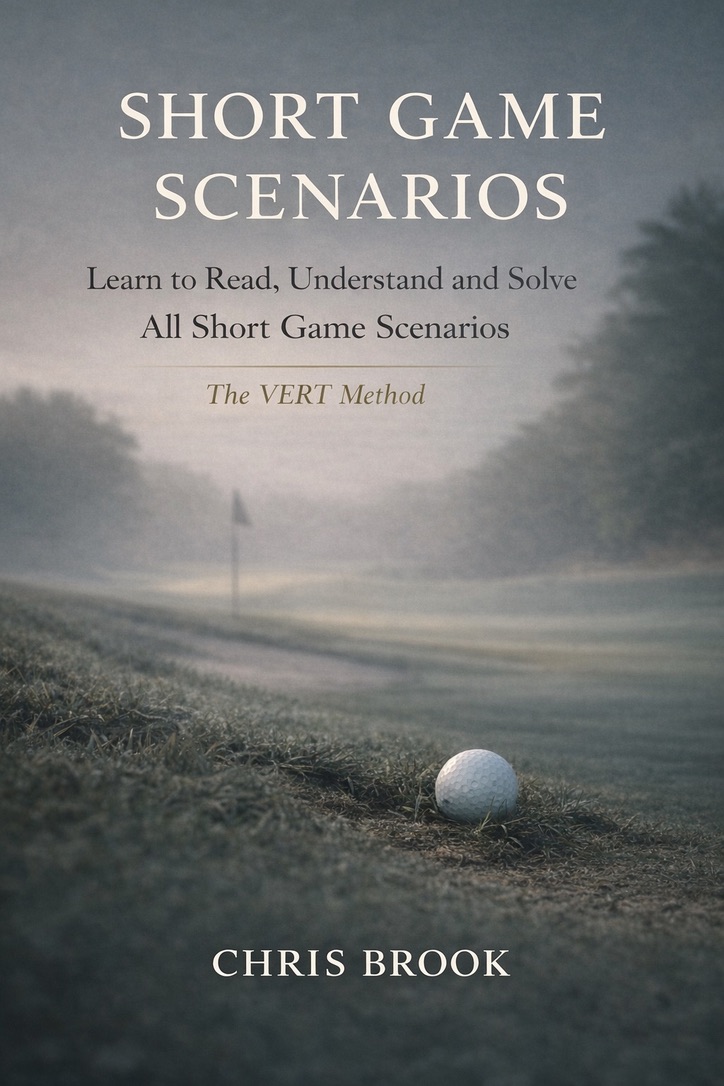
Short Game Scenarios is Chris Brook’s upcoming book on how golfers can learn to read, understand, and solve short-game situations with far greater precision.
Rather than offering generic short-game tips, the book is built around structured scenario analysis and the VERT Method. Its unique offering is not merely technique instruction. It teaches golfers how to interpret lie, slope, landing demand, release behaviour, surface influence, and tolerance windows so they can understand what the shot is actually asking.
In other words, it teaches golfers how to solve the scoring problem correctly before they select the response. That is exactly the same deeper logic that sits underneath this article’s approach-shot strategy.
Final Conclusion
The best approach shot is not always the one closest to the hole. It is the one that leaves the most intelligent putt from the safest and most structurally useful part of the green. That is how elite players really score. They do not simply attack flags and hope the leave is good. They choose the section that gives them the best next problem.
Sometimes that will still be the flag. Sometimes it will be a safer side, a lower tier, a broader landing corridor, or a more stable plateau. But the principle remains the same. The true target is not always the hole location itself. The true target is the scoring environment that gives the player the highest-quality next shot.
Do not judge the approach shot only by where it finished. Judge it by what kind of putt it created and how much of the hole remained under control.